 +86-563-4308666

 Eng
Eng
 Español
 Français
Material Composition and Key Properties of Ultra-High Chrome Alloy
Ultra-high chrome alloy (UHCA) is characterized by a chromium content typically exceeding 25%, combined with carbon levels between 2.5% and 3.5%. This high chromium-to-carbon ratio forms a dense network of hard chromium carbides in a martensitic matrix, providing exceptional wear resistance. Additional alloying elements, such as molybdenum, nickel, and vanadium, are often added to improve toughness, corrosion resistance, and impact strength. The resulting material exhibits a unique combination of high hardness, low deformation under load, and excellent resistance to abrasive wear.
Applications in Mining and Mineral Processing
In mining operations, UHCA is widely used as grinding media and wear parts due to its superior resistance to abrasion and impact. Its high hardness allows for longer operational life in ball mills, SAG mills, and rod mills, reducing the frequency of media replacement. Common application scenarios include:
- Primary and secondary ore grinding for hard rock mining, where conventional steel balls would experience rapid wear.
- High-throughput processing plants handling abrasive ores, such as iron, copper, and gold concentrates.
- Fine grinding circuits where uniform particle size and consistent performance are essential.
The dense carbide network in UHCA minimizes ball deformation, maintaining mill efficiency and reducing energy consumption during prolonged grinding cycles. Additionally, its toughness prevents catastrophic failure under impact from large ore fragments.
Use in Cement and Construction Materials Industry
Cement plants and other construction material facilities also benefit from UHCA wear parts. Grinding rollers, liners, and media composed of UHCA are employed to improve mill performance and reduce maintenance costs. Key advantages in these applications include:
- Extended service life of grinding media, reducing downtime and labor costs associated with frequent replacement.
- Enhanced resistance to high-impact abrasion from clinker and raw materials, ensuring consistent particle size distribution.
- Reduced energy consumption due to sustained mill efficiency, as UHCA retains its hardness and shape over long grinding cycles.
Furthermore, UHCA components in cement plants often outperform traditional forged steel balls, particularly in high-chrome environments where abrasive wear is prevalent.
Performance Advantages Compared to Conventional Alloys
Ultra-high chrome alloy demonstrates significant performance advantages over conventional steel and low-chrome alloys, including:
- Exceptional wear resistance: The high volume of carbides effectively protects the matrix from surface abrasion.
- Maintained hardness over time: Unlike traditional steel balls, UHCA retains its hardness despite prolonged exposure to impact and friction.
- Lower operational costs: Extended service life reduces the need for frequent replacements, saving on labor and material costs.
- Corrosion resistance: Chromium content improves resistance to oxidation and chemical degradation, especially in wet milling conditions.
- Optimized toughness: Alloying elements prevent brittle fracture, allowing UHCA to withstand both impact and abrasive wear simultaneously.
Industrial Case Studies and Performance Metrics
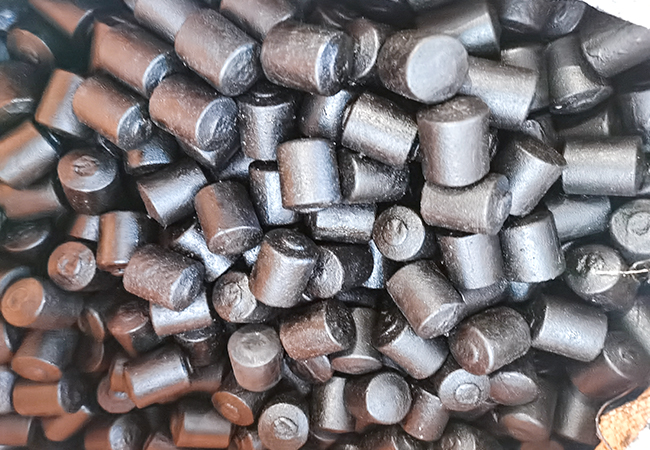
Case studies from iron ore and gold processing plants demonstrate UHCA’s superior performance. In one iron ore plant, replacing conventional steel grinding balls with UHCA reduced media consumption by 40% while maintaining throughput. Another gold concentrator reported a 35% reduction in downtime due to longer-lasting cylpebs and reduced wear on liners. Performance metrics highlight the following benefits:
| Metric | Conventional Steel | Ultra-High Chrome Alloy |
| Average Service Life (hours) | 1,500 | 3,500–4,000 |
| Wear Rate (g/ton ore) | 12–15 | 5–7 |
| Replacement Frequency | Every 3–4 weeks | Every 8–10 weeks |
Design Considerations for Maximizing UHCA Performance
To fully exploit the advantages of UHCA, designers and plant operators must consider several factors. First, proper heat treatment and quenching ensure uniform hardness and carbide distribution. Second, choosing the right ball size or cylpeb diameter for the mill type and ore hardness optimizes grinding efficiency. Third, implementing a mixed-size media charge can reduce impact stress on individual balls, extending overall service life. Finally, monitoring mill loads, particle size distribution, and wear patterns allows predictive maintenance that prevents unexpected failures.
Environmental and Operational Benefits
Using UHCA in grinding and wear applications also contributes to environmental and operational benefits. Extended service life reduces the quantity of media required, lowering production waste and material consumption. Improved milling efficiency reduces energy consumption, which decreases greenhouse gas emissions from power-intensive grinding operations. Additionally, less frequent media replacement reduces labor requirements and the safety risks associated with handling large grinding media.
Conclusion: Strategic Advantages of Ultra-High Chrome Alloy
Ultra-high chrome alloy is a highly effective material for applications requiring exceptional wear resistance, toughness, and long service life. Its superior performance in mining, cement, and other industrial grinding operations allows plants to reduce operational costs, improve efficiency, and maintain consistent production quality. By carefully selecting alloy composition, heat treatment, and media sizing, operators can maximize the benefits of UHCA while minimizing energy consumption and material waste. The combination of technical and operational advantages makes UHCA a strategic choice for modern high-performance milling and wear applications.


