 +86-563-4308666

 Eng
Eng
 Español
 Français
Why Grinding Media Selection Matters in Cement Production
A closed-circuit cement mill operating at 90 tph can consume 32 kWh of electrical energy per metric ton of finished product. Roughly 60‑70% of that power is absorbed in the grinding compartment, where the ball charge converts electrical energy into size reduction. If the grinding media lacks consistent hardness, spalls prematurely, or loses shape, specific energy consumption can rise by 10‑15%, fine adjustments to the separator cut become impossible, and unscheduled stoppages multiply. The economics are direct: a well‑matched ball charge improves mill throughput by up to 15% and cuts wear‑related downtime.
Every replacement interval represents not just the cost of new media but also lost production hours, labor, and the risk of contaminating the cement with foreign metal or fractured chips. ZXGB addresses these risks through full‑process quality control, from raw material selection to dimensional and hardness testing on every production lot, so that batch‑to‑batch variability stays inside tight tolerances and plant operators can rely on predictable consumption rates.
Core Types of Grinding Media Used in Cement Mills
Three alloy families dominate modern cement ball mills, each defined by chromium content and the resulting microstructure:
- High‑chrome alloy casting balls – Chromium content ranges from 10% to over 30%, yielding a matrix of tempered martensite with finely dispersed M₇C₃ carbides. Hardness typically falls between 60 HRC and 67 HRC, and the carbide network delivers the lowest wear rates available in wet or dry cement grinding. These high chrome alloy casting balls
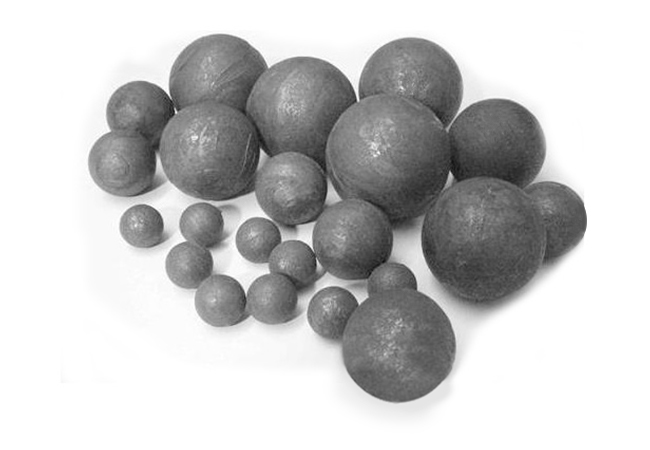 High Chrome Alloy Casting Ball Grinding Ball Suppliers, Custom Factory - NingguoAs China High Chrome Alloy Casting Ball Grinding Ball Suppliers and Custom High Chrome Alloy Casting Ball Grinding Ball Factory, Zhengxin...View Product → are the standard choice for finish mills and the second chamber of two‑compartment mills, where impact forces are moderate and surface wear dominates.
 - Low‑chrome alloy casting balls – With chromium around 1% to 5% and a predominantly pearlitic structure, hardness resides in the 48‑55 HRC range. Their lower cost makes them suitable for coarse grinding compartments that process softer clinker or when mills run at moderate speeds with limited ball‑on‑liner impact.
- Medium‑chrome alloy casting balls – Bridging the gap (Cr 5‑10%, hardness 55‑62 HRC), these balls offer a pragmatic compromise when the clinker hardness does not justify the full investment in high‑chrome but the wear rate of low‑chrome is uneconomical. Their toughness levels are intentionally engineered to prevent breakage in intermediate impact conditions.
Ceramic grinding media are occasionally discussed for cement grinding, but their density (approximately 3.6‑3.8 g/cm³ versus 7.6‑7.8 g/cm³ for steel) produces insufficient impact energy, slows mill throughput, and increases the likelihood of fracture when tramp metal enters the circuit. For these reasons, they remain confined to specialized white‑cement or ultra‑fine applications and are not recommended for general‑purpose cement mills. Additionally, some mills benefit from tailored solutions in the first chamber, where forged grinding balls for specific cement mill applications can deliver resistance to spalling under severe impact while maintaining a round shape throughout the wear cycle.
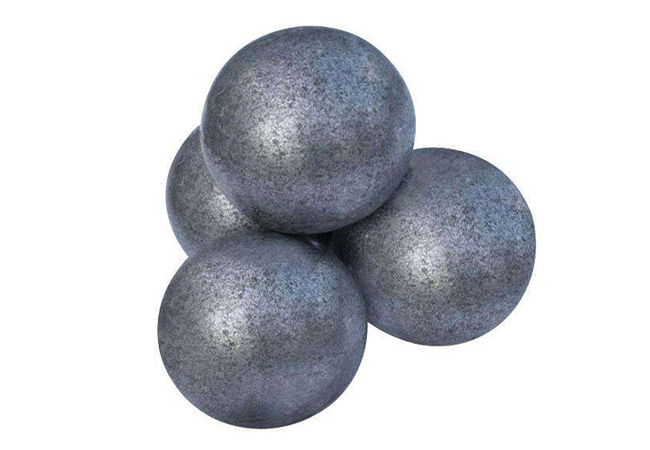 Forged Grinding Balls Suppliers, Custom Factory - Ningguo Zhengxing Wear ResistaAs China Forged Grinding Balls Suppliers and Custom Forged Grinding Balls Factory, Zhengxing offer Wholesale Forged Grinding Balls, In to...View Product →
Key Selection Criteria: Hardness, Density, and Wear Rate
Choosing among these media is not a matter of picking the hardest ball. The selection must reconcile mill diameter, rotational speed, clinker grindability, target Blaine fineness, and the ball‑charge filling ratio. A schematic decision flow typically asks:
- Does the compartment experience high impact (first chamber, large‑diameter mill, high feed size)? Then toughness takes priority, pointing to low‑ or medium‑chrome balls.
- Is the mill a single‑chamber finish mill or a second chamber with smaller feed? Surface wear governs, making high‑chrome the most economical option despite a higher initial price.
- Does the clinker contain hard phases (belitic clinker, high silica ratio)? Higher chrome content protects against accelerated abrasion.
A practical evaluation method is to run a controlled trial of one charge over a 3‑6 month campaign and measure the specific consumption in grams of media per ton of cement produced. Many plants see a 25‑40% reduction in wear mass when moving from low‑chrome to high‑chrome in the finish compartment, offsetting the premium within 9‑12 months. For a more granular view, a direct high chrome vs low chrome alloy comparison covering microstructure and application trade‑offs can sharpen the decision.
| Media Type | Chromium (wt.%) | Hardness (HRC) | Relative Wear Rate | Preferred Mill Position | Relative Cost |
|---|---|---|---|---|---|
| High‑chrome | 10–30+ | 60–67 | Very low | Finish / second chamber | Higher |
| Medium‑chrome | 5–10 | 55–62 | Low–moderate | Intermediate / coarse | Medium |
| Low‑chrome | 1–5 | 48–55 | Moderate | Coarse / soft clinker | Lower |
When clinker is highly abrasive, low chrome alloy casting balls suitable for less abrasive materials may still be the right starting point in the first chamber if breakage of harder, more brittle media has been observed. The final choice always benefits from a supplier‑led charge design that factors in real‑world liner profiles and recirculating load.
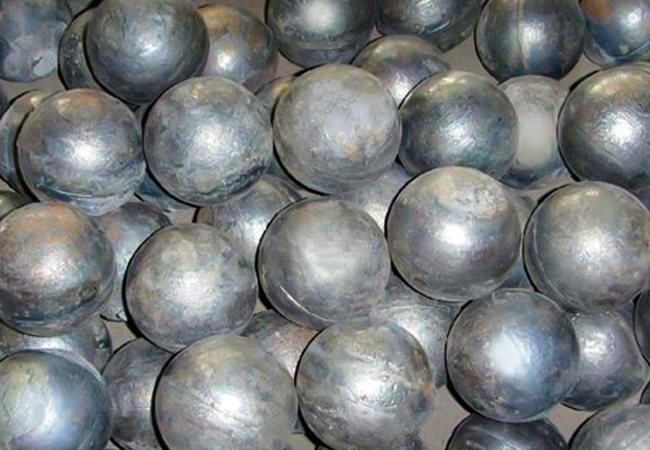 Low Chrome Alloy Casting Ball Grinding Ball Suppliers, Custom Factory - Ningguo As China Low Chrome Alloy Casting Ball Grinding Ball Suppliers and Custom Low Chrome Alloy Casting Ball Grinding Ball Factory, Zhengxing ...View Product →
The Role of Heat Treatment and Metallurgy
Wear resistance and breakage resistance are set primarily during heat treatment. In high‑chrome media, a correctly executed air‑quench from 950–1050°C followed by a controlled tempering cycle in the 200–300°C range relieves transformation stresses and stabilizes retained austenite, producing a crack‑free martensitic matrix with a uniform hardness gradient from surface to core. ZXGB’s provincial‑level research institute employs a team of 23 engineers and 32 quality‑control technicians who routinely perform optical microscopy, scanning electron microscopy, and Vickers microhardness traverses on production samples. This in‑house metallurgical oversight ensures that every shipment of grinding media meets the hardness profile specified for the customer’s mill conditions, eliminating the hidden risk of premature spalling that plagues inadequately heat‑treated alloys.
Extending Grinding Media Change Interval: Practical Tips
Replacing a ball charge is a planned maintenance event that costs not only the media itself but also 6–12 hours of lost production. Four operational disciplines can stretch the interval:
- Maintain the ball grading curve. As balls wear and reduce in size, the charge migrates away from the design size distribution. Quarterly top‑up additions of the largest required ball diameter restore the grinding efficiency and prevent a build‑up of fines that cushions impacts.
- Upgrade selectively. A compartment that consumes 40 g/t of low‑chrome media may drop to 25 g/t with high‑chrome, provided impact conditions do not cause macro‑cracking. Run a split‑charge trial first.
- Monitor liner condition. Worn or broken liners alter ball trajectory, creating dead zones and concentrating wear on a small fraction of the charge. Replacing liners on schedule protects the media investment.
- Measure the actual charge weight. Weighing the charge during scheduled stops — and comparing with the initial fill — gives a direct wear rate. Regular sampling also allows detection of broken balls before they damage the diaphragm.
Collaboration with the media supplier can further refine intervals. ZXGB provides mill‑specific charge recommendations based on the mill’s internal diameter, rotational speed, clinker characteristics, and target Blaine, helping operations teams build a replenishment calendar that aligns with kiln maintenance windows.
Why Choose ZXGB for Cement Plant Grinding Media?
Cement plants evaluating suppliers face a classic triangular tension: European producers offer advanced metallurgy but at premium pricing that can inflate total grinding cost; many low‑cost Chinese suppliers reduce the initial outlay but introduce batch inconsistency that forces conservative charge replacement. ZXGB occupies the productive middle ground — a technology‑driven manufacturer that controls the entire value chain from raw material sourcing to finished‑ball inspection, operating inside a single our ISO-certified manufacturing facility covering 60,000 square meters.
This integration is backed by 30 years of experience, a provincial‑level research institute, and a technical staff of 57 professionals who collaborate with universities on wear‑resistant alloy development. Annual capacity of 50,000 metric tons ensures that even large multi‑mill cement plants can receive consistent deliveries without dilution of quality controls. The company’s “Quality for Survival” philosophy manifests in full‑process testing: chemical analysis of incoming ferrochrome, dimensional checks after casting, systematic hardness mapping after heat treatment, and final surface‑defect inspection before packing. These disciplines translate directly into media that consumes less energy and lasts longer in the mill, supporting the two objectives that matter most to technical managers — lower kWh per ton and longer intervals between charge replacements.


