 +86-563-4308666

 Eng
Eng
 Español
 Français
Every ball mill tells a story in steel. When you pull the charge, the condition of the grinding media can tell you whether the balls were matched to the job. One of the most common questions we hear from mill operators is about chrome content. How much chromium should a grinding ball carry? The honest answer is that it depends on the application. But behind that answer is a useful framework for thinking about grinding ball performance, and it starts with what chromium actually does inside the alloy.
The Role of Chromium in Grinding Ball Metallurgy
Chromium is the most powerful alloying lever a foundry can use when designing cast grinding balls. In the microstructure, chromium combines with carbon to form carbide phases. When the chromium-to-carbon ratio is high enough, the alloy develops hard M7C3-type carbides instead of the softer Fe3C cementite. These hard carbides act like embedded cutting edges, resisting gouging and abrasive wear as the ball tumbles through the mill. That is why chrome steels dominate the grinding media industry.
Hardness and Matrix Transformation
The effect of chromium does not stop at carbides. With sufficient chromium and the right heat treatment, the surrounding matrix can transform into martensite, giving the ball a combination of high hardness and useful compressive strength. Lower chromium grades leave a softer, more ductile matrix. This is a deliberate trade-off: toughness reduces the risk of breakage, but the softer matrix wears faster over the life of the charge.
Corrosion Resistance in Wet Grinding
Wet grinding brings another factor into play. In a corrosive slurry, the ball surface can lose material by electrochemical attack as well as by mechanical abrasion. Chromium promotes a thin, stable oxide film that slows this attack. In acidic or high-chloride pulps, the difference between a high-chrome ball and a low-chrome ball is often the difference between months of service and weeks of service.
How Chrome Content Affects Wear Rate and Grinding Efficiency
Chrome content is the single best indicator of a cast grinding ball's wear behavior. More chromium increases the volume of hard carbides in the microstructure, which reduces the wear rate per ton of ore ground. The trade-off is cost and toughness. The table below summarizes typical behavior across the common chrome ranges used in industrial grinding media.
| Chrome Level | Typical Hardness | Relative Wear Rate | Preferred Application |
|---|---|---|---|
| Low (less than 10%) | 40-48 HRC | Higher | Dry grinding, cement, coal |
| Medium (10-14%) | 48-56 HRC | Moderate | Mixed dry and lightly abrasive duties |
| High (14-30%) | 58-64 HRC | Low | Wet ore grinding, mineral processing |
| Ultra-high (above 30%) | 60-66 HRC | Very low | Highly abrasive slurries with controlled impact |
You will notice that wear resistance is not linear with price. The jump from low chrome to medium chrome brings a significant improvement in wear life at a moderate cost increase. The jump from medium to high chrome is larger in wear life but also larger in alloy cost. Beyond that, ultra-high chrome grades offer only incremental gains for most mills and are usually reserved for niche applications where impact stress is well controlled.
- Hardness: higher chrome increases macro-hardness and carbide hardness.
- Impact toughness: higher chrome decreases ductility, increasing the risk of fracture in severe impact zones.
- Corrosion resistance: higher chrome reduces surface loss in wet and acidic environments.
- Cost per ton of media: higher chrome raises the purchase price but often lowers the cost per ton ground.
Low Chrome Grinding Balls: Practical Choice for Dry Grinding
For cement plants and coal mills operating in dry conditions, low chrome grinding balls remain a workhorse. The grinding environment is relatively mild, so maximum hardness is not the priority. The ball can be produced at a lower cost and still provide acceptable liner life and media life. What matters most in these applications is consistency: the same composition, hardness and performance from one batch to the next.
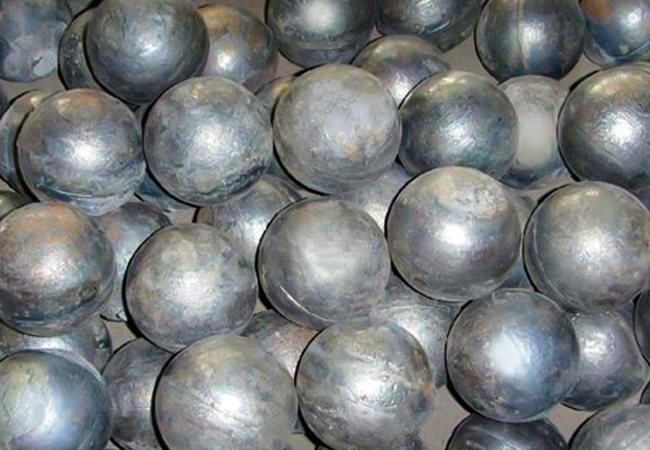 Low Chrome Alloy Casting Grinding Ball for Dry MillsDesigned for cement and coal grinding, this low-chrome ball offers consistent batch-to-batch quality at a lower cost, making it a practical choice for dry milling environments where uniformity matters more than extreme hardness.View Product →
We have seen dry mills extend their grinding media interval simply by switching to a stable, well-controlled low-chrome supply. The key is to work with a manufacturer that tests every heat, because the practical difference between a good low-chrome ball and a mediocre one has little to do with the nominal chrome number and everything to do with process control.
Medium Chrome Grinding Balls: Balanced Performance and Value
Many mills fall between two extremes. The feed is abrasive enough that low chrome wears too quickly, but the ore is not aggressive enough to justify a full high-chrome chemistry. Medium chrome grinding balls occupy that middle ground. They deliver a higher carbide volume than low-chrome grades while retaining enough toughness to handle repeated impact cycles.
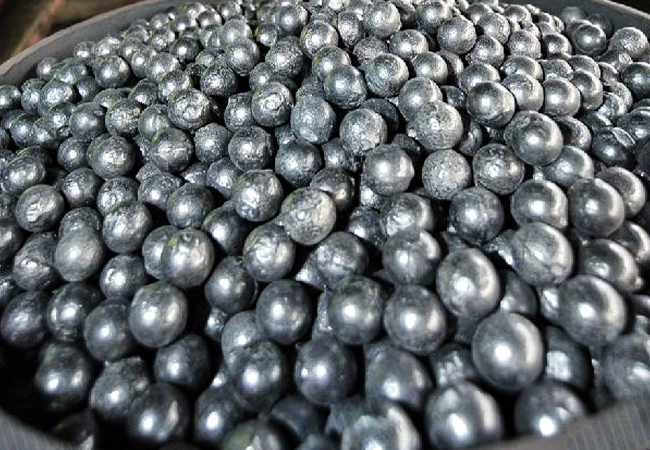 Medium Chrome Alloy Casting Grinding Ball for Balanced WearAs an intermediate option between low and high chrome grades, this ball balances hardness and toughness, suiting dry mills grinding harder clinker or secondary circuits where both abrasion and impact must be managed.View Product →
We often recommend medium-chrome balls for dry ball mills grinding harder clinker, and for secondary grinding circuits where both abrasion and impact need to be balanced. For operators upgrading from forged steel or low-chrome media, medium chrome is a logical first step: it offers measurable wear improvement without a complete change in mill operating parameters.
High Chrome Grinding Balls: Built for Abrasive and Corrosive Conditions
When the objective is maximum mill throughput and minimum media consumption, high chrome grinding balls are the first choice. With chromium levels typically between 14% and 30%, these balls develop a dense network of M7C3 carbides and reach hardness values above 58 HRC. In mineral processing, where ore pulps are often acidic or high in chlorides, the corrosion-resistant surface adds a second layer of protection.
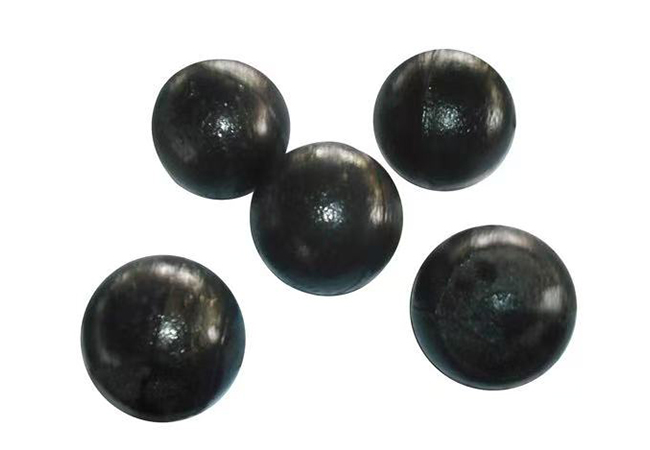 High Chrome Alloy Casting Grinding Ball for Maximum ThroughputWith high chromium content and exceptional hardness, this ball reduces media consumption in high-tonnage mineral processing, offering corrosion resistance and stable grinding efficiency despite a higher initial cost.View Product →
Many mines have cut specific media consumption by 30-50% after switching from forged steel or low-chrome cast balls to high-chrome grades. The higher unit price of the ball is offset by fewer charge replenishments, less downtime for sorting, and a more stable grinding efficiency over the life of the media. For high-tonnage operations, that balance is what makes high chrome the most economical choice.
Choosing the Right Chrome Content for Your Mill
Start with the material to be ground, then work through the practical constraints of the mill. Use this checklist when reviewing grinding media options:
- Mill type and diameter: larger mills generate more impact energy, so impact toughness matters.
- Wet or dry grinding: wet circuits introduce corrosion and justify higher chromium levels.
- Feed abrasiveness: harder minerals require harder media.
- Product size and circuit configuration: regrind and fine grinding can tolerate harder and more brittle media.
- Liner type and condition: media should complement liner design to achieve balanced wear.
- Total cost per ton: include media price, power, downtime and handling.
For mining operations, our grinding ball selection guide for mining walks through how these factors combine in practice. The same reasoning applies in cement plants, though the recommended chrome range is often lower. Remember that grinding media does not work alone: the condition and profile of your ball mill liners affect the charge motion and therefore how much of the ball's potential performance is actually delivered.
Final Thoughts
Grinding media selection is never a one-time decision. Ore conditions shift, liner profiles wear, and mill internals change over time. What remains constant is the relationship between chrome content and ball performance. Understand how chromium controls hardness, corrosion resistance and cost, and you can make better decisions about every batch of grinding balls that enters your mill.
At ZXGB, we have spent years producing chrome alloy grinding balls for mines and cement plants around the world. Each heat is cast, heat-treated and inspected before it leaves our foundry, so the chrome content you specify is the chrome content you receive. If you are uncertain which chrome level fits your operation, talk to a manufacturer who has seen mills like yours. The right conversation can save you more than the price of a single shipment.


