 +86-563-4308666

 Eng
Eng
 Español
 Français
A copper concentrator in northern Chile runs two 5.5 m ball mills around the clock. Between scheduled shutdowns, the crew tops up the grinding media charge every 24 to 48 hours — about the same cycle reported by operators at most mid-sized plants. Each recharge means handling steel, checking liners, and logging consumption. The ball that performs best for that operation is not necessarily the hardest, the cheapest, or the most premium. It is the one that delivers the lowest cost per tonne of ore while keeping the circuit stable.
Here is the conclusion up front: grinding balls in mining are the most actively replaced consumable in any tumbling mill, and the selection decision is an economic one — wear rate, breakage resistance, and energy efficiency matter far more than the unit price of the media. This guide explains how to make that decision, based on our day-to-day work producing a complete range of chrome alloy grinding media at a 50,000-tonne-per-year plant.
What grinding balls actually do in a mining circuit
In mining, grinding balls are charged into ball mills to reduce ore to a particle size that downstream processes can handle. The mill shell rotates, the charge lifts and cascades, and the impact of ball-on-ore contact breaks rock into finer particles. That size reduction is what liberates valuable minerals from the surrounding gangue — and liberation is what makes flotation, leaching, and magnetic separation possible in the first place.
A grinding ball must do three things at once:
- Deliver enough impact energy to fracture hard ore, not just polish it.
- Resist abrasive wear so the charge does not disappear halfway through the campaign.
- Stay in one piece — broken balls mean lost grinding surface, plus debris that can plug mill discharge screens and pump sumps.
Every media evaluation should start from those three requirements. Hardness numbers, chromium levels, and price are simply the means to those ends.
Why chrome alloy cast balls still dominate mining applications
The majority of grinding balls used in mining are cast alloy balls, and chromium content is the most important alloying decision a mill team will make. Chromium drives hardness through the formation of chromium carbides in the microstructure. More chromium generally means a harder ball, a lower wear rate, and less tolerance for high impact energy.
From low chrome to ultra-high chrome
Low chrome alloy cast balls contain roughly 2 to 5 percent chromium and typically measure 40 to 52 HRC. They are the budget option: cheaper per tonne, more forgiving under impact, but quicker to wear in highly abrasive ores. They fit dry mills and smaller-diameter mills where impact is moderate.
Medium chrome cast balls, at approximately 5 to 10 percent chromium, sit in the middle with hardness around 50 to 56 HRC. They deliver better wear life than low chrome without the brittleness that sometimes appears at high chrome levels.
High chrome alloy cast balls, with 11 to 17 percent chromium, commonly reach 58 to 63 HRC. For many copper, gold, and iron ore concentrators, this is the value zone, provided the mill can tolerate a more brittle ball. Our high chrome alloy casting grinding balls are engineered around exactly this balance of hardness, impact resistance, and consistent heat treatment.
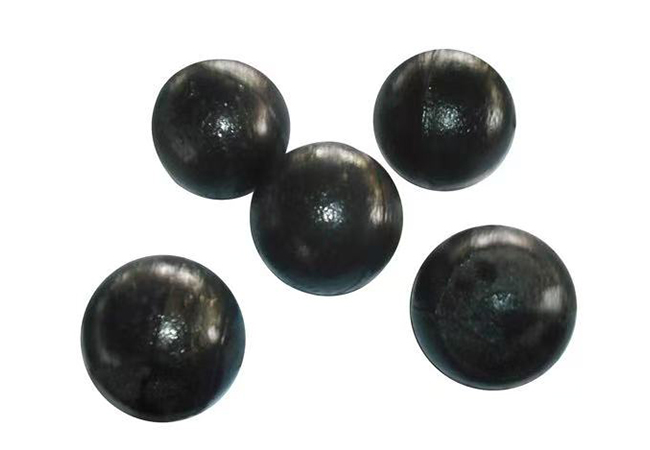 High Chrome Alloy Casting Ball Grinding Ball Suppliers, Custom Factory - NingguoAs China High Chrome Alloy Casting Ball Grinding Ball Suppliers and Custom High Chrome Alloy Casting Ball Grinding Ball Factory, Zhengxin...View Product →
A practical comparison of grinding media
| Media type | Typical chromium content | Hardness range | Impact toughness | Typical mining application |
|---|---|---|---|---|
| Low chrome cast | 2–5% | 40–52 HRC | Good | Dry mills, moderate-impact wet circuits |
| Medium chrome cast | 5–10% | 50–56 HRC | Good | Compromise duty with moderate ore abrasion |
| High chrome cast | 11–17% | 58–63 HRC | Fair | Copper, gold, and iron ore grinding |
| Ultra-high chrome cast | Above 17% | Up to about 64 HRC | Lower | Fine grinding and wear-dominated duties |
| Forged steel | Low-chromium carbon steel | 45–58 HRC | Excellent | Large-diameter and high-impact mills |
Cast or forged: which performs better in the mill?
The hardest part of media selection is not the chemistry — it is the internal structure. Cast balls are poured into molds, and even in a well-run foundry, casting can leave porosity, shrinkage cavities, or internal stresses that become initiation points for breakage under repeated impact. Forged balls are formed by shaping solid round bar, which compresses the grain structure and produces a denser, tougher ball.
The practical trade-off is simple:
- When impact energy is high — large-diameter mills, high drop heights — forged steel balls win on toughness and low breakage.
- When the duty is wear-dominated — moderate impact, highly abrasive ore — high chrome cast balls last longer between recharges.
We explain the engineering detail in a separate article on the difference between cast steel balls and forged grinding balls. The short version: choose forged for lower breakage in severe impact service, and high chrome cast for maximum wear life in stable, wear-dominated circuits.
For high-impact duties, our forged grinding balls are produced with controlled heat treatment so they keep their roundness and survive in the toughest mills.
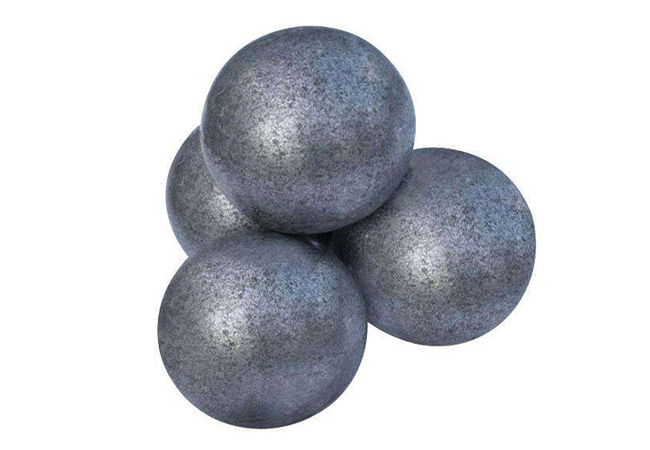 Forged Grinding Balls Suppliers, Custom Factory - Ningguo Zhengxing Wear ResistaAs China Forged Grinding Balls Suppliers and Custom Forged Grinding Balls Factory, Zhengxing offer Wholesale Forged Grinding Balls, In to...View Product →
Match the ball to the mill, the ore, and the liners
No grinding ball is best in the abstract. The correct choice depends on mill diameter, liner profile, ore hardness and abrasiveness, feed size, and even slurry chemistry. A ball that performs brilliantly in one concentrator can fail in another.
Ore abrasiveness is the first filter
The most useful starting point is the ore's abrasion index and silica content. Quartz-bearing copper ores and granite-hosted gold ores are aggressively abrasive and will grind down steel media quickly. If the abrasion index is high, operators usually move to harder media — high chrome cast or a harder heat treatment on forged balls. If the ore is soft, that extra hardness buys nothing and the media bill simply goes up.
Mill diameter, speed, and liner condition
Larger mills drop the charge from a greater height, so ball impact energy rises with mill diameter and operating speed. That favours tougher media, which is why SAG mills and large-diameter ball mills usually run forged balls. Smaller mills with lower drop heights can operate harder, more brittle cast balls safely.
Liner profile also governs what the charge does. Worn or flattened liners change the lifting action, increase slippage, and raise both media consumption and energy draw. Operators sometimes see a sudden rise in ball consumption and blame the media supplier, when the real cause is the liner. Liner and media selection should be reviewed together — the practical steps for selecting the right ball mill liner cover this interaction in detail.
Wet grinding adds a corrosion element, especially when slurry pH is acidic. Higher chromium levels reduce that corrosive wear component, which is one more reason chrome alloy balls dominate wet concentrator circuits.
The purchasing decision: cost per tonne, not price per tonne
Mining procurement sometimes fails because buyers compare media price per metric tonne, while mill managers think in grams of media consumed per tonne of ore. The two are connected, but they are not the same number.
A quick example:
- Media A at USD 900 per tonne with a consumption rate of 450 g/t costs USD 0.405 per tonne of ore.
- Media B at USD 1,100 per tonne with a consumption rate of 320 g/t costs USD 0.352 per tonne of ore.
Media B costs more to buy yet saves roughly 13 percent on media cost alone, before counting the longer interval between recharges, fewer deliveries, and less downtime. The decision should be driven by total cost per tonne milled, not by the price tag on a tonne of balls.
What to check before approving a supplier
- Chemical composition certificates: the batch analysis should list chromium, carbon, manganese, silicon, sulfur, and phosphorus — not just a single hardness number.
- Hardness testing: check both surface and cross-sectional hardness, because a hard shell over a soft core loses its roundness quickly.
- Microstructure: the distribution of chromium carbides determines wear life. A supplier that can discuss metallography is usually a serious one.
- Breakage trial: run the material for 90 days, sample the charge regularly, and compare the grams-per-tonne data against your historical baseline.
Batch consistency is where the long-term savings live. If one shipment is hard and the next is soft, the mill drifts out of control: product size changes, slurry density shifts, and recovery drops. That is why we operate full-process inspection from raw material intake to finished ball under an ISO9001 quality management system, and why serious buyers prefer to work directly with manufacturers that control the whole chain rather than with traders who cannot vouch for the product behind a certificate.
For plants where lower upfront media spend matters most — dry mills, small mills, or soft ores — low chrome alloy casting grinding balls remain a dependable and cost-efficient choice.
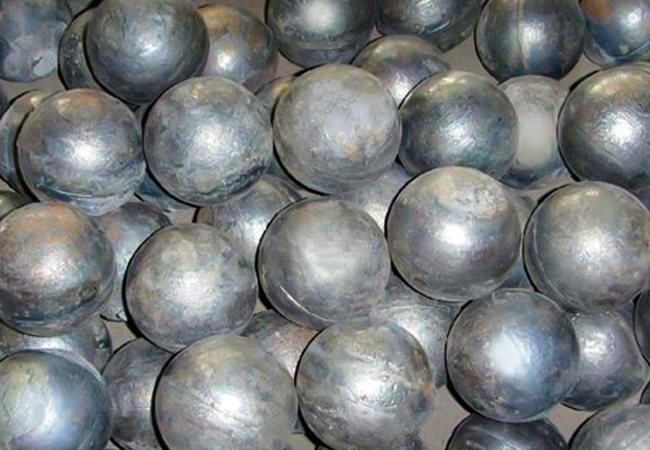 Low Chrome Alloy Casting Ball Grinding Ball Suppliers, Custom Factory - Ningguo As China Low Chrome Alloy Casting Ball Grinding Ball Suppliers and Custom Low Chrome Alloy Casting Ball Grinding Ball Factory, Zhengxing ...View Product →
Put the numbers to work
A good media selection process does not end with a purchase order. Track consumption, monitor breakage, and adjust the following order based on actual mill data. If your site does not have a strong in-house laboratory, buy from a supplier that does. Our development work is backed by a provincial research institute for steel balls and grinding media, with 25 engineers and 32 technicians on staff — which is what allows us to tune chromium levels, heat treatment cycles, and forging parameters to a specific ore type instead of offering a one-size-fits-all catalogue.
Start with the wear data from your own mill, make the ball match the duty, and let total cost per tonne drive the decision.


