 +86-563-4308666

 Eng
Eng
 Español
 Français
If you are working through a geology assignment or studying for a quiz, you have likely encountered the fill-in-the-blank question: "Minerals typically are mined from ________ deposits and separated." The correct answer is ore deposits. This straightforward answer, though, opens the door to a much larger topic that connects geology, mining engineering, and mineral processing. Understanding what an ore deposit actually is, how different types form, and the industrial steps that separate valuable minerals from waste rock will give you a complete picture of how raw materials become usable resources.
The Short Answer: Minerals Come From Ore Deposits
The concise answer to the question is that minerals are mined from ore deposits and then separated from the surrounding rock. But why "ore" and not just "rock"? The distinction comes down to economics. According to standard geological definitions, an ore is a rock or mineral that contains a valuable constituent, can be extracted or mined, and can be sold for profit. If the material cannot be extracted profitably, it is simply mineralized rock, not ore.
The key takeaway is that an ore deposit is a geological body enriched with valuable minerals to a degree that makes mining financially worthwhile. For example, copper might exist in trace amounts in many rocks, but it only becomes an ore deposit when the concentration is high enough to cover the costs of extraction and processing.
What Exactly Is an Ore Deposit?
An ore deposit is a natural concentration of one or more valuable minerals within a rock mass. The valuable minerals in these deposits typically occur in specific chemical forms, including native elements, sulfides, sulfosalts, oxides, or hydroxides. The form matters because it determines the extraction method.
Consider pyrite, often called "fool's gold." It contains iron and sulfur, but unless the deposit has other valuable metals or a very high iron content, it usually does not qualify as an ore. The best metal ore minerals are those that contain large amounts of metals of value. In contrast, a mineral like chalcopyrite, which is a copper-iron sulfide, becomes an ore when enough of it is concentrated in one place to make copper extraction economic.
Think of it this way: a kitchen spoon contains stainless steel, but the steel is so dispersed across billions of kitchens that nobody would mine a landfill for it. Ore deposits are nature's way of concentrating valuable elements into manageable volumes.
Main Types of Mineral Deposits
Geologists classify ore deposits primarily by their origin. The three most important categories are magmatic, hydrothermal, and sedimentary deposits, with placer deposits as a notable special case.
Magmatic Deposits
These form directly from the cooling and crystallization of magma. As molten rock cools, heavy minerals settle out and concentrate. Chromium, nickel, and platinum commonly come from magmatic deposits. For instance, chromite, the main ore of chromium, forms layered accumulations in large igneous intrusions.
Hydrothermal Deposits
These are formed when hot, mineral-rich fluids move through fractures and fissures in the Earth's crust. As the fluids cool or react with surrounding rocks, they deposit their dissolved minerals. Many gold, silver, copper, and lead-zinc deposits are hydrothermal in origin. Veins of quartz containing gold are a classic example that has driven gold rushes throughout history.
Sedimentary Deposits
These form through surface processes like evaporation, precipitation, or biological activity. Salt, gypsum, and limestone are common sedimentary deposits. Evaporite deposits, for instance, form when seawater or saline lakes evaporate, leaving behind concentrated layers of salts.
Placer Deposits
Placer deposits are accumulations of heavy minerals that have been eroded from their original source and concentrated by water or wind. Gold, tin, and diamonds are frequently found in placer deposits. When you see images of gold panners sifting through river gravel, they are exploiting a placer deposit.
How Are Mineral Deposits Mined?
Once a deposit is identified and deemed economically viable, the mining method is selected based on the depth, shape, and characteristics of the ore body. The two primary methods are open cut mining and underground mining.
Open Cut Mining
Open cut mining, also called open-pit mining, is used when the ore body lies relatively close to the surface. The process involves progressively expanding a pit outward and downward. Large equipment removes waste rock to expose the ore, which is then drilled, blasted, and loaded onto haul trucks. This method is common for copper, iron, and gold deposits that extend over large areas.
Underground Mining
When ore deposits extend deep below the surface, underground mining becomes necessary. This method involves developing tunnels and shafts to safely access deeper deposits. Underground mining is more expensive and complex than open cut mining, but it becomes the only option when the stripping ratio—waste to ore—makes surface mining impractical.
Before either method begins, geologists drill exploration holes and build three-dimensional models of the ore body. These models determine the grade, tonnage, and geometry of the deposit, all of which feed into the decision of whether and how to mine it.
From Mined Rock to Separated Minerals
Mining only gets the ore out of the ground. The real challenge begins when you have a pile of rock that contains a small percentage of valuable minerals mixed with a large amount of waste material, called gangue. The separation process follows a deliberate sequence of physical and chemical steps.
Crushing
The first step is reducing the mined ore to smaller pieces. Primary crushers break large boulders down to a size that can be handled by conveyors and secondary crushers. The goal here is purely physical size reduction.
Grinding
Grinding further reduces the crushed ore to a fine powder. This step is critical because it liberates the valuable mineral grains from the surrounding gangue. If the ore is not ground finely enough, the valuable minerals remain locked inside waste particles and cannot be recovered. Ball mills are the workhorses of this stage, rotating a cylindrical drum filled with steel balls that impact and abrade the ore into fine particles.
The efficiency of this grinding stage depends heavily on the equipment and the grinding media used. For an inside look at what happens inside the mill, you can read about how to select the right ball mill liner to understand how internal components affect grinding performance.
Concentration and Separation
Once the ore is ground, the liberated mineral particles are separated from the gangue using methods like froth flotation, gravity separation, or magnetic separation. Froth flotation is the most widely used method for sulfide ores. It works by adding chemicals that make the valuable mineral particles hydrophobic (water-repelling), then bubbling air through the slurry. The valuable minerals attach to the bubbles and rise to the surface as a froth, which is skimmed off and collected. The waste gangue remains in the slurry and is discarded as tailings.
Why Grinding Media Matter in Mineral Separation
The grinding stage is where the physical separation of minerals begins, and the quality of the grinding media directly influences how well this separation works. Grinding balls in a ball mill perform three functions: impact, compression, and abrasion. The balls must be hard enough to fracture the ore, tough enough to resist breaking themselves, and uniform enough to maintain consistent grinding performance over time.
Different ore types require different grinding media characteristics. For hard, abrasive ores, high chrome alloy grinding balls offer excellent wear resistance and a long service life, which reduces the frequency of media replenishment. Their high hardness makes them particularly effective in the final grinding stages where fine particle size is required.
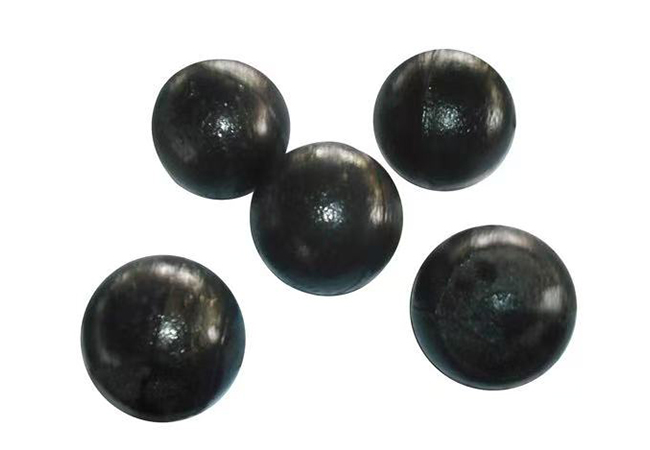 High Chrome Alloy Casting Ball Grinding Ball Suppliers, Custom Factory - NingguoAs China High Chrome Alloy Casting Ball Grinding Ball Suppliers and Custom High Chrome Alloy Casting Ball Grinding Ball Factory, Zhengxin...View Product →
For applications that involve larger mill diameters or higher impact forces, forged grinding balls for tougher applications provide superior toughness and resistance to breakage. Forged balls are manufactured by hammering or pressing heated steel, which aligns the grain structure and gives them the resilience needed to withstand repeated high-energy impacts without cracking.
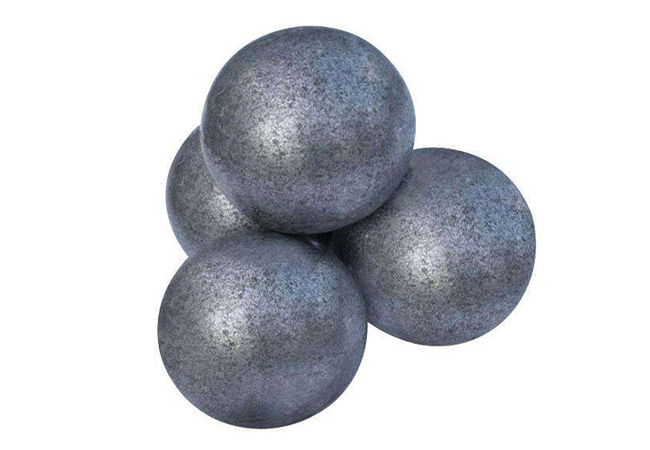 Forged Grinding Balls Suppliers, Custom Factory - Ningguo Zhengxing Wear ResistaAs China Forged Grinding Balls Suppliers and Custom Forged Grinding Balls Factory, Zhengxing offer Wholesale Forged Grinding Balls, In to...View Product →
The choice between cast and forged balls is not arbitrary; it depends on the specific conditions of the mill, the ore hardness, and the target particle size. If you are curious about these differences, this article explains the difference between cast and forged steel balls in practical terms.
Choosing the right grinding media is a technical decision that affects not just grinding efficiency but also energy consumption and overall operating costs. A ball that wears too quickly increases media replacement costs, while a ball that breaks apart wastes energy and reduces grinding efficiency. For this reason, mill operators evaluate ball hardness, impact toughness, and wear rate before selecting media for a specific ore type.
Common Confusions Clarified
To wrap up, it is worth clearing up a few frequent points of confusion that come up when students study this topic.
Are Ore and Mineral the Same Thing?
No. A mineral is a naturally occurring, inorganic substance with a defined chemical composition and a crystalline structure. An ore is a rock or mineral that contains a valuable constituent that can be profitably extracted. All ores contain minerals, but not all minerals are ores. Quartz is a mineral, but it only becomes an ore if the quartz contains enough gold or other valuable metals to make mining worthwhile.
Why Are Some Minerals Not Mined From Deposits?
Some minerals, particularly those that dissolve easily in water, are extracted directly from solutions. For example, salt and calcium carbonate can precipitate out of seawater or saline lakes. Geothermal waters can also carry dissolved metals that are recovered through pumping rather than conventional mining. These are still considered mineral resources, but they are not mined in the traditional sense of digging rock.
Do Industrial Minerals Count as Ores?
Yes. Industrial minerals like halite (salt), gypsum, clays, and calcite are mined from ore deposits. While they lack the glamour of gold or copper, they are economically valuable and meet the definition of ore because they can be extracted and sold for profit. The same geological principles that apply to metal ores also apply to these bulk commodities.
Understanding that minerals typically are mined from ore deposits and then separated clarifies the entire chain of mineral production. From the formation of a deposit deep underground to the final concentrated product ready for smelting, every step depends on geology, engineering, and the careful selection of processing equipment. The next time you see a ball mill in operation or read about grinding media, you will know exactly why that equipment exists: it is the bridge between a rock in the ground and the pure metal in your hands.


