 +86-563-4308666

 Eng
Eng
 Español
 Français
What Are Ceramic Grinding Balls?
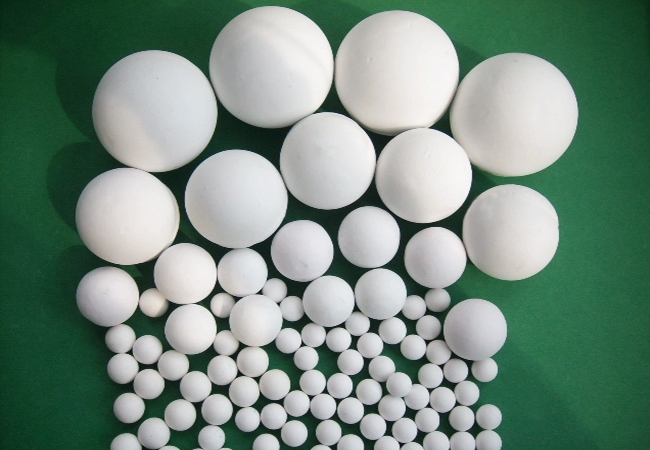
Ceramic grinding balls are high-density spherical media used inside ball mills to crush, grind, and homogenize materials. They are manufactured from advanced ceramic materials such as alumina (Al₂O₃), zirconia (ZrO₂), silicon nitride (Si₃N₄), and zirconium silicate. Unlike conventional steel or cast iron balls, ceramic grinding media are engineered specifically to deliver low contamination, high wear resistance, and stable chemical properties across a wide range of milling environments.
The manufacturing process typically involves isostatic pressing or injection molding followed by high-temperature sintering, which produces a dense, uniform microstructure. This results in grinding balls with precisely controlled hardness, density, and surface smoothness — all critical parameters for efficient ball mill operation. Common ceramic ball diameters range from 0.1 mm for ultra-fine wet grinding to over 60 mm for coarse dry grinding applications.
Key Performance Advantages in Ball Mill Applications
Ceramic grinding balls consistently outperform conventional steel media across several critical performance dimensions in ball mill operations. These advantages are not marginal — in many industrial sectors, switching to ceramic media has translated to measurable improvements in product quality and operating costs.
Minimal Product Contamination
One of the most significant benefits is purity. Steel balls introduce metallic ions (Fe²⁺, Fe³⁺) and trace heavy metals into the ground product through abrasive wear. For industries such as pharmaceuticals, food processing, electronic ceramics, and advanced pigments, even parts-per-million levels of iron contamination are unacceptable. High-alumina or zirconia ceramic balls exhibit wear rates as low as 0.01–0.05 g/kWh, compared to 0.5–2.0 g/kWh for steel, making them the clear choice for contamination-sensitive milling.
Extended Service Life and Lower Replacement Costs
High-quality zirconia grinding balls offer a Vickers hardness of 1,200–1,500 HV and exceptional fracture toughness. In continuous ball mill operation, zirconia balls can last 3–5 times longer than steel balls under equivalent milling conditions. Although the upfront cost per kilogram is higher, the total cost of ownership is reduced due to fewer shutdowns for media replacement, less product loss from contamination, and lower disposal costs associated with worn metal media.
Improved Energy Efficiency
Ceramic grinding balls, particularly those made from high-density zirconia (density: ~6.0 g/cm³), deliver strong impact energy relative to their size. In wet ball mills, their smooth surface texture reduces interparticle friction and improves slurry flow dynamics. Studies in battery material processing have shown energy savings of 10–20% when switching from steel to high-density ceramic media, primarily due to reduced mill motor load and more efficient particle-size reduction per unit of energy consumed.
Ceramic vs. Steel Grinding Media: A Side-by-Side Comparison
The table below summarizes the most relevant technical and operational differences between ceramic and steel grinding balls when used in ball mills:
| Property | Ceramic Grinding Balls | Steel Grinding Balls |
|---|---|---|
| Density (g/cm³) | 3.6 – 6.0 | 7.7 – 7.9 |
| Hardness (HV) | 1,000 – 1,500 | 600 – 900 |
| Wear Rate (g/kWh) | 0.01 – 0.05 | 0.5 – 2.0 |
| Contamination Risk | Very Low | High (metallic ions) |
| Chemical Resistance | Excellent | Poor in acidic/alkaline |
| Initial Cost | Higher | Lower |
| Service Life | 3–5× longer | Baseline |
| Best Application | Fine/ultra-fine milling, sensitive materials | Heavy-duty coarse grinding |
Industries Where Ceramic Grinding Balls Are the Superior Choice
Ceramic grinding balls are not a universal replacement for all ball mill applications, but they are decisively better suited for specific sectors where product purity, precision, and process stability are non-negotiable. The following industries rely on ceramic grinding media as the standard rather than the exception:
- Lithium Battery Materials: Cathode and anode materials such as LiFePO₄, NCM, and graphite require ultra-pure, narrow particle size distribution. Iron contamination from steel balls directly degrades battery cycle life and safety. Zirconia balls at 0.3–2 mm are now standard in this sector.
- Electronic Ceramics and Piezoelectric Materials: Dielectric ceramics such as BaTiO₃ and MLCC powders demand contamination-free milling. Even sub-ppm iron levels alter dielectric properties. Alumina and zirconia balls at 1–10 mm are widely used.
- Pharmaceutical and Food-Grade Processing: Active pharmaceutical ingredients (APIs) and food additives require FDA-compliant milling environments. Ceramic balls are inert, non-toxic, and easy to validate for GMP compliance.
- Coatings, Inks, and Pigments: Dispersion of organic pigments and titanium dioxide requires fine, uniform grinding without discoloration from metallic wear. Zirconium silicate balls at 0.4–1.5 mm are preferred for ink jet and high-performance coating applications.
- Advanced Ceramics Production: Milling of alumina, zirconia, and silicon carbide powders for technical ceramics demands high-hardness, low-wear media. Ceramic balls resist the abrasive action of these hard raw materials far better than steel.
Limitations of Ceramic Grinding Balls to Consider
While ceramic grinding balls offer substantial benefits, they are not always the optimal choice for every ball mill scenario. Understanding their limitations helps avoid costly misapplication:
- Lower Density for Coarse Grinding: Alumina balls (density: ~3.6 g/cm³) generate less impact energy than steel balls (density: ~7.8 g/cm³) at the same size. For coarse feed materials requiring high kinetic energy to fracture large particles, steel or high-density zirconia may perform better.
- Brittleness at Large Diameters: Ceramic balls above 50 mm can fracture under very high mill speed or with hard, abrasive feed materials. Steel balls are more forgiving in high-impact coarse milling environments.
- Higher Initial Investment: Quality zirconia balls can cost 8–15× more per kilogram than steel balls. While the total cost of ownership is often lower over time, the upfront capital requirement can be a barrier for smaller operations.
- Mill Liner Compatibility: Switching from steel to ceramic balls may require evaluation of existing rubber or steel mill liners. Lighter ceramic loads can change the optimal mill speed and filling ratio, requiring process re-optimization.
How to Select the Right Ceramic Grinding Balls for Your Ball Mill
Choosing the correct type and size of ceramic grinding balls requires matching the media properties to both the material being processed and the ball mill's operating parameters. The following decision framework covers the most important selection variables:
Material Type Selection
Alumina balls (92–99% Al₂O₃) are cost-effective for general ceramic, mineral, and chemical milling where moderate purity is sufficient. Zirconia balls (yttria-stabilized ZrO₂) are the premium option for battery materials, electronics, and pharmaceutical applications where ultra-low contamination and high grinding efficiency are critical. Zirconium silicate balls balance cost and performance for paints, inks, and mid-range applications.
Ball Size and Mill Speed
Ball diameter should be approximately 10–20× the top particle size of the feed material. For a feed material with a D90 of 500 μm, ball diameters of 5–10 mm are appropriate. As target particle size decreases toward submicron range, ball size should reduce accordingly — balls of 0.1–0.5 mm are used for nano-grinding. Mill critical speed should be adjusted to 65–80% when using ceramic balls, as their lower density shifts the optimal cascade dynamics compared to steel media.
Filling Ratio and Load Optimization
The standard ball filling ratio for ceramic grinding balls in ball mills is 40–50% of mill volume. Overfilling reduces grinding efficiency and increases mechanical stress on the mill, while underfilling reduces contact frequency between balls and feed particles. For wet ball milling, the slurry solid content is typically maintained at 60–75% by weight, with a viscosity low enough to ensure efficient ball movement and particle suspension throughout the grinding cycle.
Conclusion: Are Ceramic Grinding Balls More Suitable for Ball Mills?
For the majority of modern industrial ball mill applications — particularly those involving fine particle size targets, purity-sensitive products, or wet milling conditions — ceramic grinding balls are not just suitable; they are demonstrably superior to traditional steel media. Their combination of high hardness, low contamination, extended service life, and compatibility with corrosive slurry environments makes them the preferred grinding media across high-tech manufacturing sectors.
Steel balls retain an advantage in heavy-duty coarse grinding where raw impact energy outweighs purity concerns, and where operating budgets make the higher upfront cost of ceramics difficult to justify. However, as product quality standards rise and material science continues to advance, ceramic grinding balls are increasingly becoming the default choice — not the premium exception — in ball mill operations worldwide.


