 +86-563-4308666

 Eng
Eng
 Español
 Français
Why Ball Mill Liner Selection Directly Affects Your Bottom Line
A ball mill liner is not a passive wear part sitting inside the shell. It shapes how the grinding media moves, how the material is broken down, and how long the mill can run before the next shutdown. Plants that treat liner selection as an afterthought often end up paying for it twice: once in accelerated liner replacement costs, and again in lost throughput from poor grinding efficiency. Choosing the correct liner material, profile, and thickness for your specific ore or clinker characteristics can extend service life significantly while keeping energy consumption under control.
Before comparing materials, it helps to understand exactly what the liner is protecting and how its shape changes the grinding action inside the drum. Both factors need to be evaluated together, because a liner that is chemically well-suited to your material but poorly shaped for your mill speed will still underperform.
What a Ball Mill Liner Actually Does
The liner sits between the grinding media and the mill shell. Its two core functions are protecting the shell from impact and abrasion, and controlling the trajectory of the grinding balls as the drum rotates. A well-designed liner lifts the charge to an optimal height before it cascades or free-falls onto the material bed, maximizing impact energy without causing excessive plate wear or liner bolt fatigue.
Protection of the Mill Shell
Without a liner, the shell itself would absorb the full force of tumbling grinding media, leading to rapid metal loss and eventual structural failure. Replacing a shell is far more expensive and time-consuming than replacing a liner, so the liner is effectively a sacrificial, replaceable buffer.
Control of Grinding Media Movement
Liner profile determines whether the charge slides, rolls, or is lifted and dropped. Smooth liners tend to promote sliding and abrasive grinding, which suits fine grinding chambers. Wave, step, or lifter-bar profiles promote a cascading or cataracting motion, which is preferred for coarse grinding where impact breakage dominates.
Matching Liner Material to Your Grinding Conditions
Material selection should start with the abrasiveness of the feed, the impact energy in the mill, and the operating environment (wet or dry grinding, temperature, corrosive slurry chemistry). The table below summarizes how the most common liner materials perform against these variables.
| Material | Typical Hardness | Best Suited For | Relative Service Life |
| High-Chromium Cast Iron | 58-62 HRC | Highly abrasive ores, clinker grinding | Long |
| High-Manganese Steel | HB 300-350 (work-hardens) | High-impact, medium/small mills | Medium |
| Alloy Steel | Balanced hardness/toughness | Mixed impact and abrasion duty | Medium-Long |
| Rubber | Low hardness, high resilience | Wet grinding, fine grinding, noise-sensitive sites | Varies with duty |
High-chromium cast iron is generally the first choice for large mills processing hard, abrasive ore or cement clinker, since its wear resistance can be more than double that of standard manganese steel. Rubber liners remain the preferred option in wet grinding circuits where noise reduction, weight savings, and corrosion resistance outweigh the need for maximum hardness.
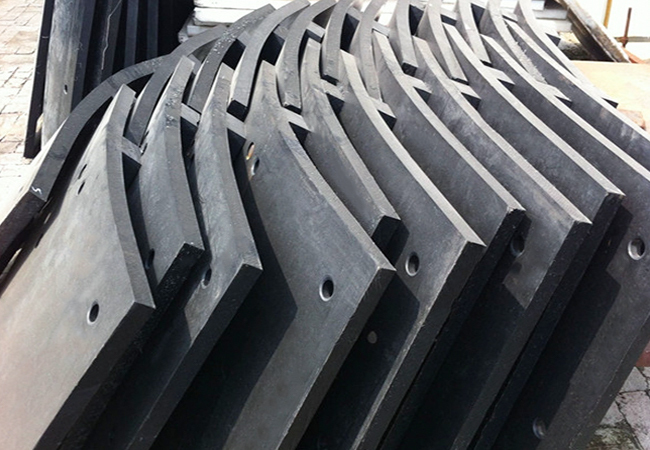
Key Factors to Evaluate Before Ordering a Liner
Material is only one variable. The following factors should all be reviewed together with your liner supplier before finalizing an order.
- Mill diameter, speed, and percentage of critical speed, which determine whether cascading or cataracting motion is desired
- Feed size and hardness of the material being ground
- Whether the circuit is wet or dry, since wet grinding favors rubber or composite liners
- Liner profile: wave, step, flat, or lifter-bar, matched to the grinding chamber (coarse vs. fine)
- Bolt hole pattern and fixing method, to ensure compatibility with the existing mill shell
- Expected downtime and labor cost for liner replacement, which affects the total cost of ownership beyond the purchase price
Common Mistakes That Shorten Liner Life
Even a well-specified liner can wear prematurely if operating conditions are not properly controlled. The most frequent causes of early liner failure are avoidable with routine monitoring.
Running the Mill at the Wrong Speed
Operating above the intended percentage of critical speed causes the charge to strike the liner directly rather than the material bed, leading to metal-on-metal impact and rapid plate cracking.
Ignoring Circumferential Grooving
When liners, particularly double-wave designs, begin to show circumferential grooves, this typically indicates the charge is slipping rather than being lifted properly. Left unaddressed, this accelerates wear across the entire liner set rather than a single section.
Mixing Incompatible Ball and Liner Materials
Pairing very hard grinding balls with a softer liner material, or the reverse, can cause one component to wear disproportionately fast. Balls and liners should be selected as a matched system rather than independently.
How to Work With Your Liner Supplier
The most reliable way to shorten the selection process is to share complete operating data with your supplier before requesting a quote or drawing. At minimum, this should include mill diameter and length, operating speed, feed material and its hardness, target product fineness, and whether the circuit runs wet or dry. Suppliers with in-house casting and heat treatment capability can also advise on custom profiles rather than forcing a standard catalog shape onto a non-standard mill.
For plants replacing liners for the first time, or switching from one material family to another, a trial installation in one grinding chamber is a low-risk way to confirm wear rates and grinding performance before committing to a full mill changeover.
Final Takeaway
Selecting the right ball mill liner comes down to matching material hardness and profile to your specific ore hardness, mill speed, and grinding chamber function, while keeping total cost of ownership, not just purchase price, in view. High-chromium cast iron remains the standard for abrasive, high-impact duty, while rubber and alloy steel liners serve specific niches where weight, noise, or corrosion resistance matter more than raw hardness. Reviewing these factors with an experienced liner manufacturer before ordering will reduce unplanned downtime and extend the interval between liner replacements.


