 +86-563-4308666

 Eng
Eng
 Español
 Français
What Are Low Chrome Alloy Castings?
Low chrome alloy castings are a category of wear-resistant cast iron and cast steel products containing chromium content typically ranging from 1% to 3% by weight, often combined with other alloying elements such as molybdenum, manganese, nickel, and silicon to achieve a targeted balance of hardness, toughness, and wear resistance. Unlike high chrome alloys — which contain 12% to 30% chromium and are used in the most abrasively extreme applications — low chrome alloys occupy a highly practical middle ground: they deliver significantly superior wear performance compared to plain carbon cast iron, while remaining substantially more affordable to produce than high-alloy alternatives. This combination of accessible cost and meaningful performance improvement has made low chrome alloy castings one of the most widely specified wear material solutions across mining, cement, power generation, aggregate processing, and bulk material handling industries worldwide.
The metallurgical basis of low chrome alloy castings' performance lies in the formation of chromium carbide phases within the iron or steel matrix during solidification. These hard carbide particles — dispersed through a martensitic or pearlitic matrix depending on heat treatment — resist abrasive wear far more effectively than the softer iron matrix alone. The chromium content also improves hardenability, allowing the casting to develop consistent hardness throughout its section thickness during heat treatment, which is critical for components that wear progressively through their cross-section during service. The result is a casting that maintains its wear resistance from the surface through to the core, rather than being hard only in a shallow surface layer.
Key Industries and Applications That Rely on Low Chrome Alloy Castings
The practical value of low chrome alloy castings is best understood through the specific applications where their combination of wear resistance, structural integrity, and cost efficiency makes them the material of choice. These castings are not a generic commodity — they are precision-engineered components designed to withstand the most demanding industrial environments while delivering predictable, measurable service life improvements over conventional materials.
Mining and Mineral Processing
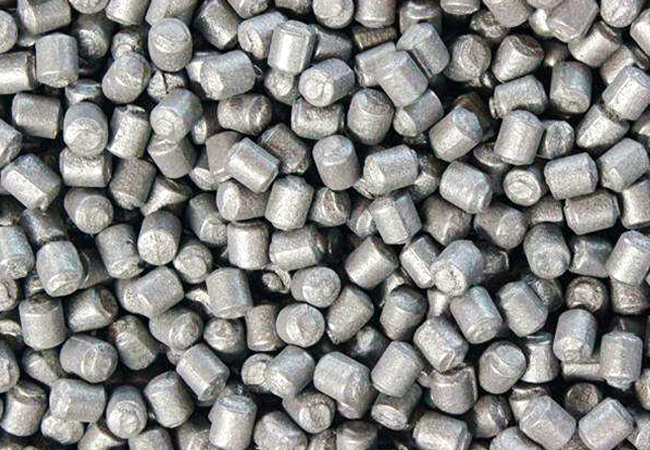
In mining operations, wear-resistant castings protect critical equipment from the relentless abrasion of ore, rock, and mineral slurries. Low chrome alloy castings are extensively used as grinding media — balls and cylpebs — in ball mills and rod mills processing copper, gold, iron ore, and other minerals. They are also specified for mill liners, crusher wear parts including concaves, mantles, and jaw plates, as well as pump housings and impellers handling abrasive slurry streams. The controlled hardness profile of low chrome alloy grinding balls — typically 58 to 63 HRC surface hardness with strong core toughness — prevents the fracturing and spalling that would occur with a fully hardened but brittle high-chrome ball, while still delivering substantially longer wear life than forged steel or plain cast iron alternatives.
Cement and Construction Materials
Cement manufacturing subjects grinding and crushing equipment to extremely high abrasion from clinker, limestone, and raw meal. Low chrome alloy castings are the standard material specification for ball mill grinding media in cement plants, where their combination of hardness and impact resistance handles the dual stresses of grinding contact and ball-on-ball impact inside rotating mills. Separator wear parts, classifier liners, and conveying system components in cement plants also commonly use low chrome alloy castings for their durability and predictable wear rates, which facilitate planned maintenance scheduling and inventory management.
Power Generation
Coal-fired power stations rely on pulverizing mills to grind coal to the fine particle size required for efficient combustion. The grinding elements within these mills — including grinding balls, rings, and table segments — experience severe abrasive wear from coal, and in many plants also from the ash and silica content in lower-grade coals. Low chrome alloy castings provide the wear resistance needed to achieve economical service intervals in this application while maintaining the structural toughness to handle the shock loads generated by hard inclusions in the coal feed.
Aggregate and Sand Processing
Quarrying, sand washing, and aggregate production operations use a range of crushing, screening, and conveying equipment that is continuously exposed to abrasive stone, gravel, and sand. Low chrome alloy castings are used extensively in impactor and cone crusher wear components, as well as in pump components handling sand-laden water and in chute liners for aggregate transfer points. The affordability of low chrome alloys relative to higher-chrome or tungsten carbide alternatives makes them particularly attractive in aggregate applications where the sheer volume of wear components required makes material cost a major factor in operational economics.
Performance Characteristics: What Low Chrome Alloy Castings Actually Deliver
Understanding the specific performance properties of low chrome alloy castings — and how those properties are achieved and verified — is essential for making informed procurement decisions and for setting accurate performance expectations in engineering and maintenance planning.
| Property | Typical Value Range | Significance |
| Surface Hardness | 58 – 63 HRC | Directly determines resistance to abrasive wear at the contact surface |
| Core Hardness | ≥ 45 HRC | Ensures wear resistance is maintained through the full service life of the component |
| Impact Value | 3.0 – 6.0 J/cm² | Measures toughness; prevents fracturing under impact loading in mills and crushers |
| Chromium Content | 1% – 3% | Enables carbide formation and improves hardenability at competitive material cost |
| Breakage Rate (grinding media) | < 0.5% | Low breakage reduces media consumption cost and prevents mill damage from fragments |
| Out-of-Round Rate (balls) | < 3% | Dimensional consistency ensures predictable mill loading and grinding efficiency |
These performance figures are not simply catalog claims — they are verified through standardized test protocols including Rockwell hardness testing across multiple points on each production batch, impact testing per GB/T 229 or equivalent international standards, and dimensional inspection. Reputable manufacturers supply batch test certificates with each shipment, providing procurement engineers and plant maintenance teams with traceable quality documentation that supports warranty claims and performance analysis.
Durability by Design: How Manufacturing Process Drives Reliability
The durability of low chrome alloy castings is not simply a function of chemical composition — it is equally the result of controlled manufacturing processes that ensure the alloy's potential performance is fully realized in the finished component. Variations in casting technique, heat treatment protocol, and quality control rigor produce significant differences in actual service life between products that appear identical on paper.
Casting and Solidification Control
High-quality low chrome alloy castings are produced using sand casting or metal mold casting processes with carefully controlled pouring temperatures and mold designs that promote directional solidification and minimize internal porosity. Porosity — small voids within the casting caused by trapped gases or shrinkage during solidification — creates stress concentration points that initiate cracks under the cyclic impact loading experienced in mill and crusher applications. Rigorous control of melt chemistry, including deoxidation and degassing treatments before pouring, combined with appropriate mold design, produces dense, homogeneous castings with the structural integrity needed for demanding applications.
Heat Treatment for Optimized Hardness and Toughness
The balance between hardness and toughness in low chrome alloy castings is established through precise heat treatment — typically a quenching and tempering cycle that transforms the as-cast microstructure into a martensitic matrix with controlled carbide distribution. Quenching parameters, including quench media (air, oil, or water mist), quench temperature, and quench rate, are calibrated to the specific alloy composition and component geometry to achieve the target hardness profile from surface to core. Subsequent tempering at carefully controlled temperatures relieves quench stresses that could cause cracking in service without significantly sacrificing the hardness gains achieved during quenching. This precision in heat treatment is what separates components that deliver consistent, predictable service life from those that perform erratically or fail prematurely.
Why Affordable Pricing Does Not Mean Compromised Quality
A common misconception in industrial procurement is that lower-cost wear materials necessarily involve compromises in quality, consistency, or service life. In the case of low chrome alloy castings from established manufacturers with modern production facilities, this assumption is demonstrably false. The cost advantage of low chrome alloys over high chrome and other premium wear materials is structural — it derives from lower raw material costs and less complex heat treatment requirements — not from reduced quality standards or inferior process control.
- Lower chromium content means lower raw material cost per tonne of finished product compared to high chrome alloys, with no reduction in the manufacturing precision or quality assurance required to produce a consistent, high-performing casting.
- Efficient, high-volume production of standardized sizes and grades — particularly for grinding media — allows manufacturers to achieve economies of scale that reduce per-unit cost without cutting corners on alloy chemistry or heat treatment compliance.
- Direct supply relationships between manufacturers and industrial end users, bypassing multiple distribution layers, further reduce delivered cost while maintaining full traceability and quality documentation from the production facility.
- Long-term supply agreements allow manufacturers to optimize production scheduling and material procurement, passing efficiency savings to customers in the form of competitive pricing on consistent-quality product.
The true measure of value in wear castings is not purchase price per tonne but cost per tonne of material processed or per hour of machine uptime — metrics that consistently favor high-quality low chrome alloy castings over both cheaper unalloyed alternatives (which wear faster and require more frequent replacement) and more expensive high-chrome alternatives (whose premium cost is not always justified by proportionally longer life in moderate-abrasion applications).
Selecting the Right Low Chrome Alloy Casting for Your Application
Maximizing the performance and cost-efficiency benefits of low chrome alloy castings requires matching the specific alloy grade, hardness specification, and component geometry to the actual operating conditions of the application. A single generic specification will not perform optimally across all uses — the variables of abrasive type, particle size, impact energy, wet or dry operation, and temperature all influence which variant of low chrome alloy will deliver the best results.
- For high-impact applications such as primary ball mills processing coarse ore or large-diameter grinding balls, prioritize alloys and heat treatment protocols that maximize toughness (impact value) even at a slight reduction in surface hardness, to prevent fracturing under heavy impact loads.
- For high-abrasion, lower-impact applications such as fine grinding mills, cement clinker mills, or fine aggregate processing, maximize hardness specification to extend wear life, since the reduced impact energy in these applications allows harder, less tough grades to perform without fracturing.
- For wet grinding applications involving corrosive slurries or acidic process water, consider low chrome alloy grades with slightly elevated chromium content toward the upper end of the 1% to 3% range, as this improves corrosion resistance alongside wear resistance.
- Always request and review batch test certificates covering hardness, impact value, and chemical composition before accepting delivery of any lot of low chrome alloy castings, and establish baseline performance data from the first service trial to build a reliable record for future procurement decisions.
- Work with suppliers who offer technical support in application analysis and alloy selection — manufacturers with genuine metallurgical expertise can recommend optimized specifications based on your specific ore type, mill dimensions, and operating parameters, reducing the trial-and-error cost of finding the right product.


