 +86-563-4308666

 Eng
Eng
 Español
 Français
Ask three mill operators how long their grinding balls last and you will probably get three different answers. One will swear by a set that has been running for two years, another will tell you the same grade failed in six months. Both can be right. Ball life is not a fixed number stamped on a box; it is the result of how one specific ball grade, one specific mill, and one specific ore interact over thousands of hours of impact and abrasion.
We have supplied grinding media to cement plants, mining concentrators and power stations for a long time, and the conversation almost always starts with that same question. So here is a practical, experience-based answer: what "normal" life looks like, what pushes it up or down, and how to tell when it is time to top up or change the charge.
The Short Answer: Realistic Service Life Ranges
In a well-run continuous ball mill, most operators see roughly the following figures:
- High chrome cast balls (12% Cr and above): about 6,000 to 14,000 hours in cement grinding, often longer in fine secondary circuits.
- Forged alloy steel balls: about 3,000 to 8,000 hours, with the widest spread of any grade because performance depends heavily on the hardness profile and on ore abrasiveness.
- Medium and low chrome cast balls: about 2,500 to 6,000 hours, usually chosen where cost per tonne matters more than hours on the clock.
- Ceramic balls: much longer in calendar time, typically measured in years, but economic only in fine grinding, contamination-sensitive products or small-diameter applications.
Notice how wide those ranges are. Hours alone are almost meaningless. What really matters is how many tonnes of material a ball helped grind before it disappeared, which is why experienced buyers talk in grams per tonne rather than in months.
What Actually Decides How Long a Grinding Ball Lasts
Chemistry and hardness
A ball wears through a combination of abrasion, impact fatigue and corrosion. Chrome content raises abrasion resistance because hard carbides form in the matrix, while a properly hardened forged ball resists impact fatigue better. The hardness number alone is not the whole story either. A ball that is hard only on the surface will lose its advantage as soon as that layer is gone, which is why through-hardness and a deep hardened case matter so much in practice. In most circuits, the best results come from our high chrome grinding balls, which keep a stable wear rate as the diameter shrinks instead of deteriorating sharply.
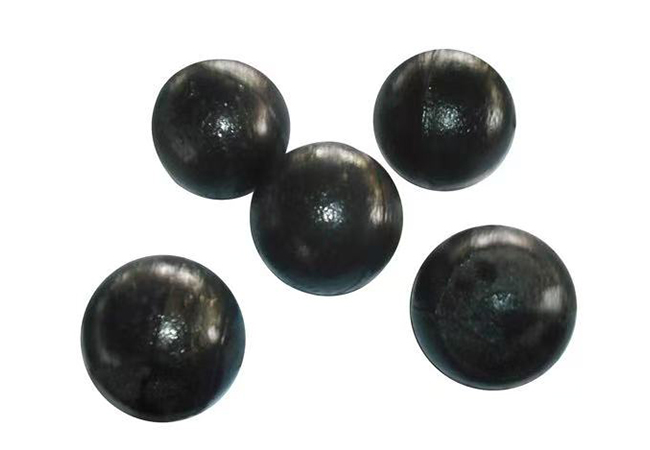 High Chrome Alloy Cast Grinding Ball for MillsHigh-chrome cast grinding media for mining and cement mills, with customizable sizes and corrosion resistance in wet or aggressive circuits.View Product →
Mill conditions
Two mills running the same ore with the same ball grade can still differ by 40% in ball consumption. Mill speed relative to critical speed, the filling degree, pulp density, feed size and the Bond work index all change the energy a ball absorbs. Liner condition matters just as much: worn liners with flattened profiles reduce the lifting action, so balls slide instead of tumbling, producing more abrasion and less useful impact. High pulp density and acidic or alkaline slurry also add a corrosion component that quietly shortens life in wet grinding circuits.
Ball size, charge and top-up discipline
Ball life is also a charge-management issue. Oversized make-up balls create excessive impact energy, which cracks balls and accelerates breakage long before they wear out. Under-sized balls leave coarse particles unground, forcing the mill to run longer. Keeping a balanced size distribution, topping up a little and often rather than in large infrequent batches, and keeping the mill at the recommended filling level will usually do more for ball life than switching grades.
Typical Wear Rates at a Glance
The table below summarises what we commonly see across cement and hard-rock grinding circuits. Treat the numbers as directional rather than guaranteed, because every circuit has its own signature.
| Ball type | Typical wear rate | Typical service life | Where it fits best |
|---|---|---|---|
| High chrome cast | 15 - 40 g/t | 6,000 - 14,000 h | Cement and fine secondary grinding |
| Ultra-high chrome cast | 12 - 35 g/t | 8,000 - 16,000 h | Abrasive ore, long-life circuits |
| Medium chrome cast | 30 - 70 g/t | 3,500 - 7,000 h | General purpose, budget sensitive |
| Forged alloy steel | 30 - 90 g/t | 3,000 - 8,000 h | Primary and SAG-related circuits |
| Ceramic | 2 - 8 g/t | Multi-year | Ultra-fine, contamination-free grinding |
How to Extend Grinding Ball Life
Nothing here is exotic, but the mills that consistently achieve the top of the range tend to do all of it:
- Match the ball grade to the ore's abrasiveness index rather than to the cheapest quotation.
- Control the make-up ball size so the largest balls in the charge stay within the design limit.
- Top up frequently in small amounts to avoid sudden load swings and impact spikes.
- Inspect and rotate mill liners on schedule, since a worn profile raises ball consumption.
- Keep pulp density and mill speed inside the recommended window instead of chasing throughput.
- Store balls dry and protected, especially in humid climates, to prevent surface corrosion before use.
- Track grams of media consumed per tonne of product, not just calendar hours, so comparisons stay honest.
Signs That Your Balls Are Nearing the End of Their Life
Balls rarely announce their retirement politely. Watch for these signals:
- Mill power draw creeping up while throughput stays flat or falls.
- More fines and slimes in the product, together with a coarser tail.
- A rising share of small, deformed or oval balls in the charge.
- Visible breakage, flats or shells in the daily sample.
- Faster make-up ball consumption than the previous quarter for the same tonnage.
When two or more appear at once, it is usually cheaper to reclassify the charge and add fresh media than to wait for a full grind-out.
Balls and Liners Wear as One System
One point we keep coming back to with customers: you cannot optimise media in isolation. The liner profile determines how the charge is lifted, and a mismatched combination of hard balls and soft or badly shaped liners simply moves the wear elsewhere. If impact breakage is your main problem, a forged steel grinding ball with uniform through-hardness often outperforms a harder but more brittle alternative, while the liner needs enough toughness to absorb the same blows.
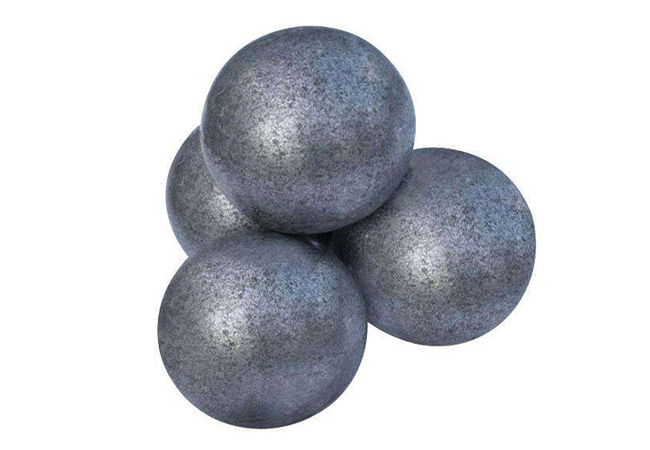 Forged Steel Grinding Balls for Ball MillsPrecision-forged grinding media with balanced hardness and toughness, suited to mining, cement, and power generation ball mills under impact.View Product →
On the liner side, ultra-high manganese steel is a common answer where impact dominates, since it work-hardens under repeated loading and keeps a protective surface. Choosing the right liner grade alongside the right ball grade is usually where the biggest cost saving hides.
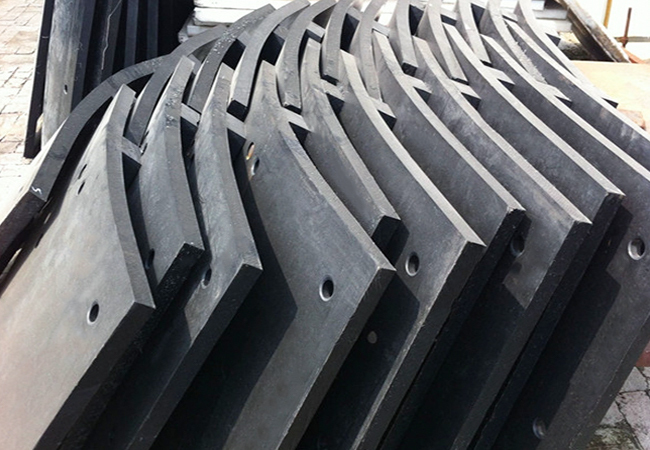 Ultra-High Manganese Steel Ball Mill LinerWork-hardening wear liner for ball mills, SAG mills, and crushers, protecting equipment in mining, cement, thermal power, and metallurgy under severe impact.View Product →
Quick Answers to Common Questions
How long do grinding balls last in a cement mill?
In a typical closed-circuit cement mill, expect roughly 6,000 to 14,000 hours for high chrome cast media, depending on clinker hardness, fineness targets and mill speed. Cement circuits generally see longer life than abrasive hard-rock circuits.
Is ball life measured in hours or tonnes?
Tonnes, or grams per tonne of material ground. Hours hide the truth, because a mill that runs slowly at low load will obviously keep its balls longer while producing far less. Cost per tonne of finished product is the only figure that lets you compare two grades fairly.
Can I extend life just by changing the make-up policy?
Often, yes. Correcting oversized make-up balls and topping up more frequently is one of the cheapest improvements available, and it usually shows up in reduced breakage within the first few weeks of the change.
If you are trying to work out how long your own grinding balls should last, the most useful thing you can do is start recording media consumption per tonne alongside mill power, product fineness and liner condition. Within a few months you will have a benchmark that is worth more than any published figure. If you would like a second opinion on whether your current grade is the right fit for your ore and your mill, our engineers are always happy to look at your data with you.


