 +86-563-4308666

 Eng
Eng
 Español
 Français
A cement plant in Southeast Asia recently reported that its ball mill had to stop for media sorting every two days. The grinding ball breakage rate was so high that maintenance teams were pulling out cracked and broken 60 mm balls from the first compartment. Plant engineers estimated that more than 10 percent of the ball charge was replaced each month, and every stoppage cut daily output by about 5 percent. Yet the same plant could have avoided most of that loss. Grinding ball breakage is not a mystery; it follows a pattern controlled by material selection, manufacturing quality, and mill operating parameters. When all three factors are aligned, the breakage rate can be reduced drastically without additional capital investment.
What Actually Causes a Grinding Ball to Break?
The grinding ball inside a ball mill is subjected to high impact energy, abrasive sliding, and cyclical thermal stress. If the material has insufficient toughness for the specific impact level, cracks will initiate and grow quickly. More often than not, the seeds of those cracks are already present before the ball enters the mill.
In practice, the causes fall into four groups: an alloy grade selected with hardness that exceeds its toughness limit for the mill's duty; manufacturing defects such as micro-shrinkage, gas porosity, or non-metallic inclusions; mill operating conditions that cause excessive ball-on-ball contact; and temperature or corrosivity factors that accelerate surface crack growth. Identifying the dominant cause in your mill is the first step, because mixed causes demand a combined response.
| Breakage cause | Typical symptom | Most effective remedy |
|---|---|---|
| Hardness exceeds toughness limit | Surface spalling, fatigue cracks, whole-ball fracture | Match the chrome content and ball type to the impact energy of the mill |
| Manufacturing defects | Shrinkage cavities, gas holes, variable hardness between batches | Use suppliers with rigorous heat treatment and full-process inspection |
| Mill overload or excessive ball charge | Rapid increase in breakage after an operational change | Lower filling rate, reduce ball diameter, and correct the media gradation |
| Thermal stress and corrosion | Surface cracks near the mill shell, broken balls after hot stoppage | Improve mill cooling; choose corrosion-resistant alloy grades |
A single unsorted charge can hide several of these causes at once. That is why periodic media classification and hardness spot-checks are essential for anyone trying to bring the breakage rate down.
Matching Alloy Chemistry to Mill Conditions
For most mills, the fastest way to reduce breakage rate is to re-examine the alloy grade. Low chromium balls, with 1–3 percent Cr, provide good toughness and are rarely prone to fracture. Their hardness, however, is only 45–52 HRC, so they wear more quickly and produce higher overall grinding media consumption. High chromium balls reach 58–65 HRC, meaning excellent abrasion resistance, but the same hardness can become a liability in high-impact chambers.
| Ball type | Hardness range (HRC) | Impact toughness (J/cm²) | Breakage risk scenario |
|---|---|---|---|
| High chrome alloy casting ball | 58–65 | 4–6 | Higher risk in high-impact primary mills |
| Medium chrome alloy casting ball | 52–58 | 6–8 | Moderate risk; good for cement grinding |
| Low chrome alloy casting ball | 45–52 | 8–10 | Low risk of fracture, but lower wear resistance |
| Forged grinding ball | 55–62 | 8–12 | Low breakage risk even under severe impact |
In a cement finish mill with moderate impact energy, high chrome balls are the safer and more economical choice. They show lower wear per ton of cement while maintaining an acceptable breakage rate.
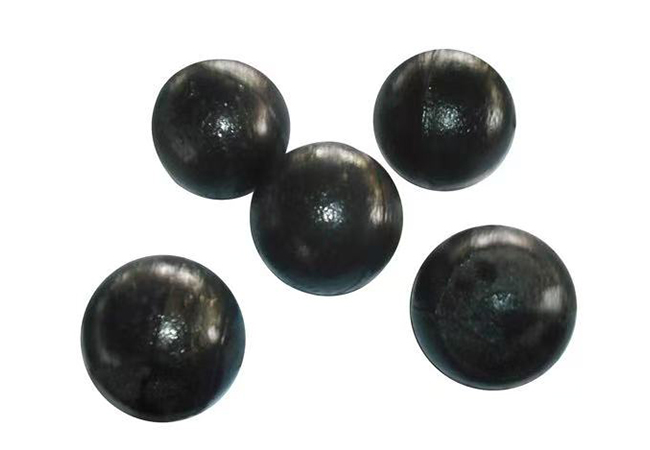 High Chrome Alloy Cast Grinding Ball for Cement Finish MillsDesigned for moderate impact conditions in cement finish mills, these high-hardness, corrosion-resistant balls offer low wear per ton of cement while maintaining an acceptable breakage rate.View Product →
When the mill is operating as a primary grinder with large feed particles and severe drop heights, forged grinding balls are designed to absorb the impact without fracturing. Industrial forged milling media regularly shows impact toughness up to 12 J/cm², which makes it far more forgiving in high-energy chambers.
Manufacturing Quality: Why Batch Consistency Matters
Even a perfectly selected alloy grade fails if the manufacturing process produces internal defects. Today's high-quality grinding ball production combines precision casting or forging with a carefully controlled heat treatment. Forging is especially attractive for large diameter balls because it converts the steel into a dense structure with fewer porosity defects, reducing the probability of crack initiation.
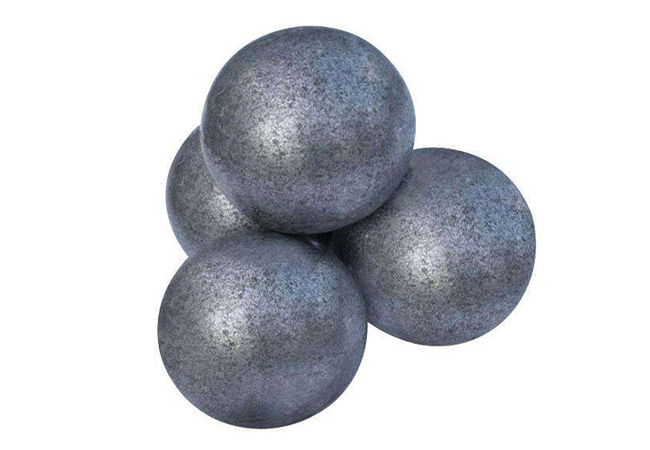 Precision-Forged Grinding Ball for Dense, Defect-Free MicrostructureForged balls eliminate porosity and shrinkage through precision forging, delivering dense, uniform structure and balanced hardness-toughness for reliable performance under intense impact.View Product →
When cast grinding balls are used, the heat-treated microstructure must be uniform from surface to core. An incomplete hardening process leaves the core softer than the shell, and in service the ball deforms instead of resisting wear. Non-metallic inclusions are another major source of fatigue fractures. Those inclusions act as stress concentrators that cause cracks at a much lower impact level than the rated toughness would suggest.
This is why full-process inspection is not a marketing slogan. In a serious production facility, spectrometric analysis of the melt, periodic hardness testing on each heat-treatment batch, and dimensional checks before packing prevent a mixed batch from reaching the customer. The difference in breakage rate between a certified supplier and an opportunistic trader is often measured in percentage points, not in isolated incidents.
Operating Parameters: Tuning the Mill to Protect the Media
Optimized mill operation reduces the stress placed on the balls. The mill filling rate, usually 30–35 percent of the internal volume, is a critical factor. A charge level too high forces more ball-to-ball collisions per revolution, which quickly increases the chance of fracture. A charge level too low, on the other hand, lifts the feed to high zones where coarse particles can strike the balls or lining directly.
Ball size distribution also matters. An oversized ball in a fine grinding chamber creates a high impact event on a small particle, accelerating media loss and often breaking the ball itself. Regularly supplementing the charge with fresh, properly sized balls and removing broken ones removes the weakest links from the charge. For a detailed reference on matching grinding ball types to a specific process, a selection guide for grinding balls in mining can help you compare the practical trade-offs.
Additionally, mill speed influences media elevation. Running the mill above the critical speed increases the drop height and therefore the impact energy. Many plant operators do not realize that a 5 percent increase in mill speed can raise the incidence of ball breakage by a much larger percentage. In practice, careful adjustments to the mill speed, feed rate, and ball charge are among the most cost-effective measures for reducing breakage.
Choosing a Supplier Who Owns the Full Process
The final piece of the puzzle is the supplier. In grinding media, the specific price per ton is less important than the cost per ton of finished product. A ball that fails early causes downtime, labour, and a drop in mill throughput. These hidden costs are far larger than the price difference between an average ball and a well-manufactured one.
At ZXGB, for example, the production process covers raw material sourcing, melt composition, continuous casting, heat treatment, and final inspection. The factory spans 60,000 square metres and has an annual capacity of 50,000 tons, which means orders are fulfilled from stable production lines rather than from opportunistic spot purchases.
For mills that require the highest possible wear resistance while still controlling breakage, ultra-high chromium balls deliver the best result when the mill's impact conditions are carefully managed.
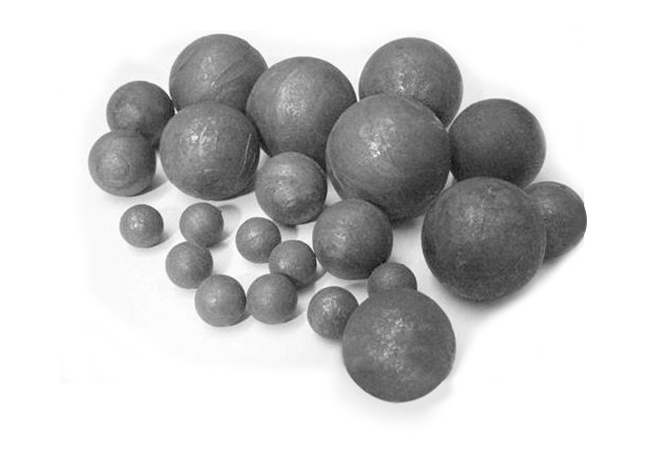 Ultra-High Chromium Alloy Casting Ball for High Wear ResistanceUpgraded high-chrome balls provide exceptional hardness and wear resistance with optimized microstructure for crack resistance, suitable for demanding dry and wet grinding when impact is controlled.View Product →
Before selecting a supplier, ask about its quality control systems, furnace line capacity, and reference plants with a similar grinding duty. A buyer who has access to hardness data, chemical composition certificates, and a reliable batch-to-batch record will perform better over the long term.
Conclusion: Lower Breakage Is a Decision, Not an Accident
Reducing grinding ball breakage rate is not achieved by selecting a single super-hard ball. It comes from aligning the alloy grade with the mill's impact energy, demanding consistent manufacturing quality, tuning operating parameters, and choosing a partner who can guarantee batch-to-batch stability. Each of these steps contributes a measurable improvement, and the cumulative effect is a significantly lower total cost per ton of ground product.


